Women’s Clothing Manufacturer in Turkey
How to Choose a Reliable Women’s Clothing Manufacturer in Turkey?
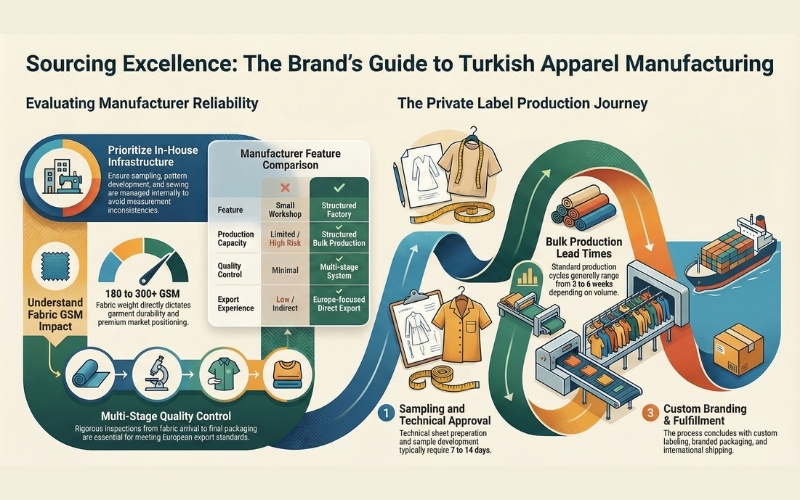
Private Label Women’s Clothing Manufacturer in Turkey Production Guide (2026)
When choosing a reliable women’s clothing manufacturer in Turkey, brands should evaluate production capacity, private label capabilities, minimum order quantity (MOQ), quality control systems, and export experience. A true textile manufacturer manages the entire process in-house — from sampling and pattern development to bulk production and shipment.
Production Infrastructure: How to Identify a Real Manufacturer
Manufacturers serving European markets typically operate with structured quality standards, social compliance policies, and strict delivery planning. Private label production allows brands to launch collections under their own label with full control over fabric, design, and packaging while ensuring scalable, long-term manufacturing partnerships.
• Production Capacity
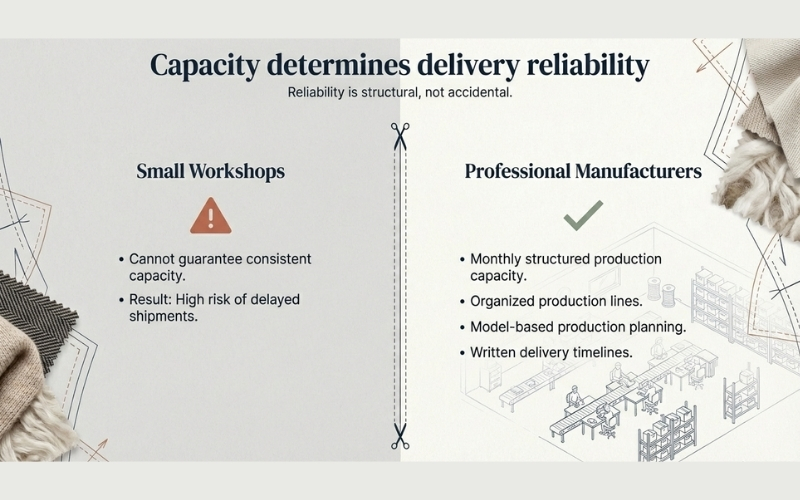
A professional textile manufacturer should provide:
-
Monthly structured production capacity
-
Organized production lines
-
Model-based production planning
-
Written delivery timelines
Small workshops often cannot guarantee consistent capacity, which increases the risk of delayed shipments.
• Sampling Department & Product Development
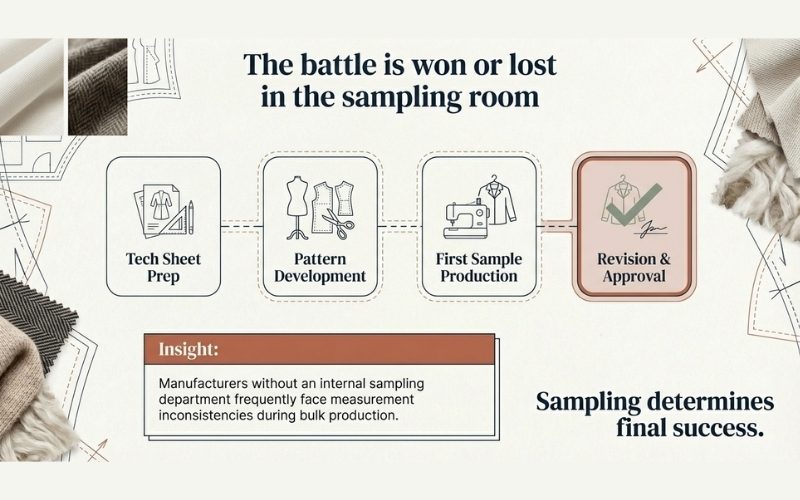
In private label production, the sampling process determines final success:
-
Technical sheet preparation
-
Pattern development
-
First sample production
-
Revision and approval
Manufacturers without an internal sampling department frequently face measurement inconsistencies during bulk production.
• Machinery & Technical Equipment
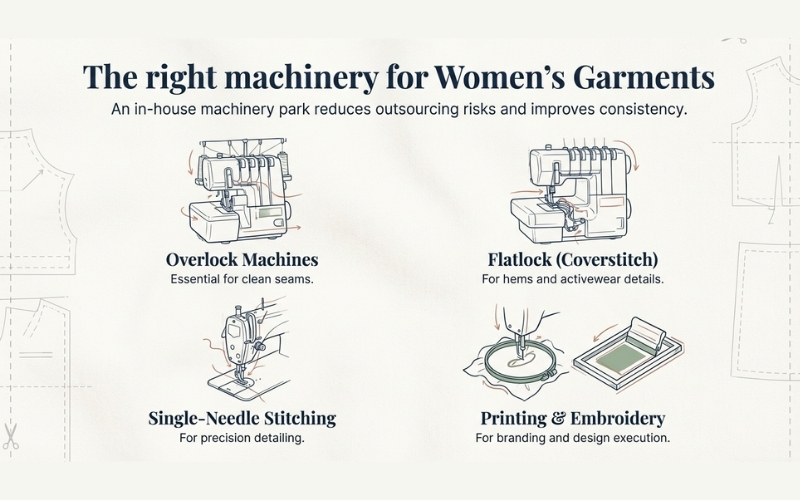
Women’s garment production typically requires:
-
Overlock machines
-
Flatlock (coverstitch) machines
-
Single-needle stitching machines
-
Printing and embroidery equipment
An in-house machinery park reduces outsourcing risks and improves quality consistency.
Fabric and Material Selection
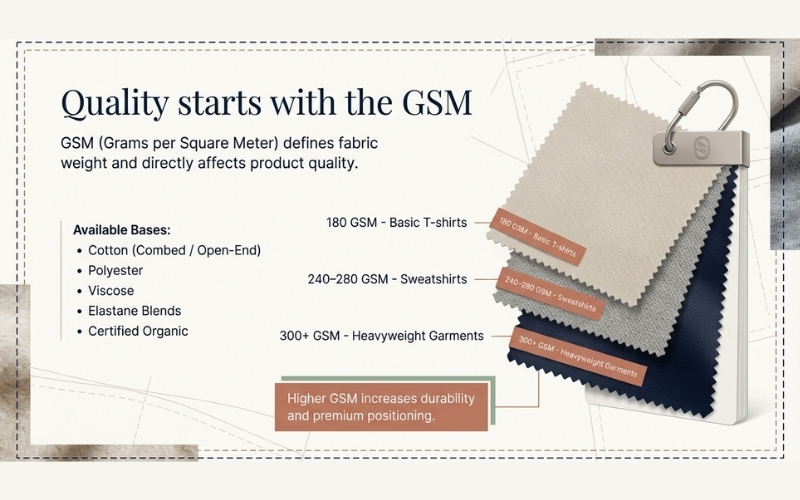
A reliable women’s clothing manufacturer should offer diverse fabric options:
-
Cotton (Combed / Open-End)
-
Polyester
-
Viscose
-
Elastane blends
-
Certified organic fabrics
What Is Fabric GSM?
GSM (grams per square meter) defines fabric weight and directly affects product quality and pricing.
Examples:
-
180 GSM – Basic T-shirts
-
240–280 GSM – Sweatshirts
-
300+ GSM – Heavyweight garments
Higher GSM increases durability and premium positioning.
Quality Control Process
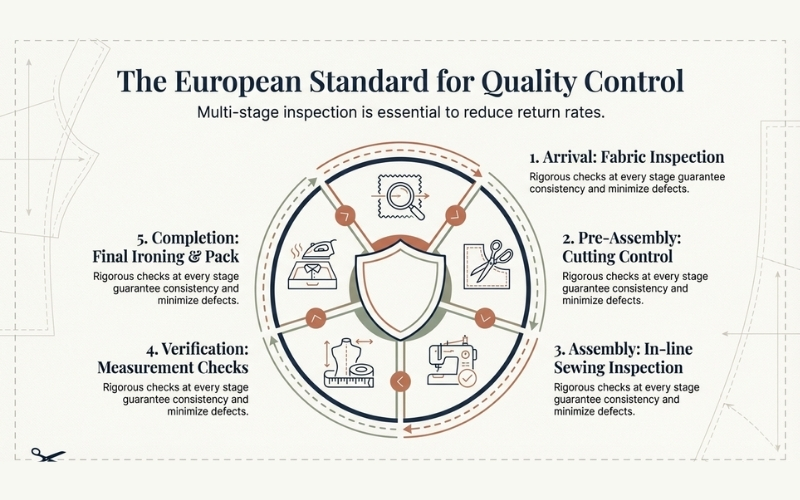
A structured quality control system includes:
-
Fabric inspection upon arrival
-
Cutting control
-
In-line sewing inspection
-
Measurement tolerance checks
-
Final ironing and packaging inspection
For European export markets, multi-stage quality control is essential to reduce return rates and compliance risks.
Private Label Women Clothing Production Process
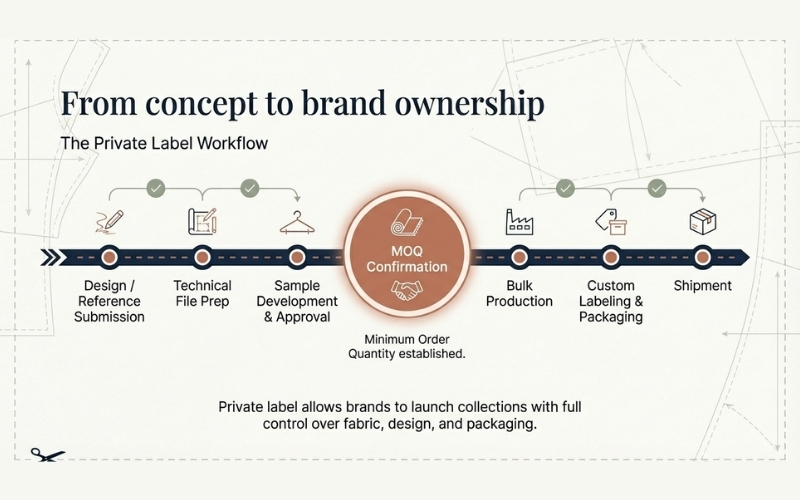
Private label manufacturing means producing garments under your brand name.
The standard process:
-
Design or reference product submission
-
Technical file preparation
-
Sample development
-
Sample approval
-
MOQ confirmation
-
Bulk production
-
Custom labeling & packaging
-
Shipment
Why Is MOQ (Minimum Order Quantity) Important?
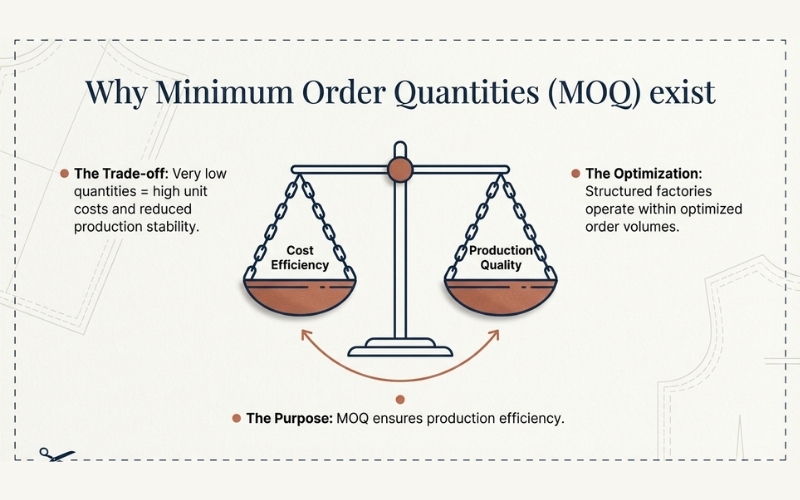
MOQ ensures production efficiency and cost balance.
Very low quantities increase unit costs and reduce production stability.
Structured factories operate within optimized order volumes to maintain quality-price balance.
Export Experience & International Standards
Manufacturers serving European markets should demonstrate:
-
Consistent quality standards
-
Social compliance practices
-
Ethical production policies
-
Structured delivery planning
Timely shipment is critical in markets such as Germany, France, and the Netherlands.
Market Landscape: Comparison Table
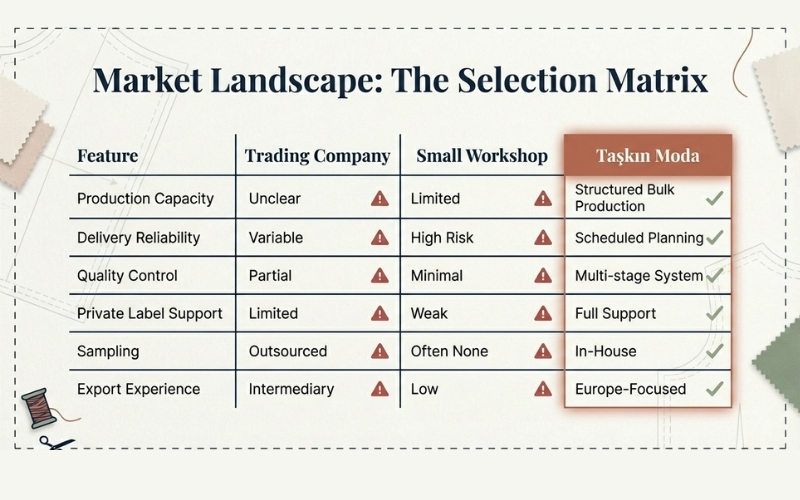
| Feature | Trading Company | Small Workshop | Taşkın Moda |
|---|---|---|---|
| Production Capacity | Unclear | Limited | Structured bulk production |
| Delivery Reliability | Variable | High risk | Scheduled planning |
| Quality Control | Partial | Minimal | Multi-stage system |
| Private Label Support | Limited | Weak | Full support |
| Sampling Department | Outsourced | Often none | In-house |
| Export Experience | Through intermediaries | Low | Europe-focused |
Factors Affecting Pricing
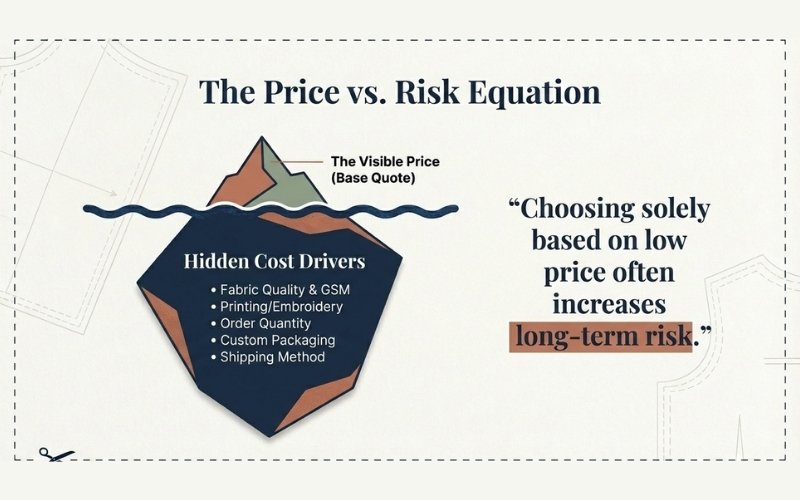
Women’s garment production cost depends on:
-
Fabric type
-
Fabric GSM
-
Printing or embroidery applications
-
Order quantity
-
Custom labels and packaging
-
Shipping method
Choosing solely based on low price often increases long-term risk.
Taşkın Moda at Women Clothing Positioning
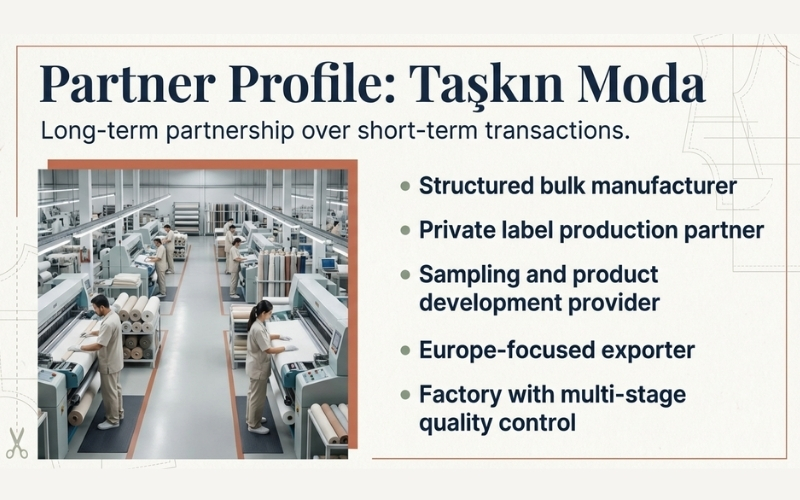
Taşkın Moda operates as:
-
A structured bulk manufacturer
-
A private label production partner
-
A sampling and product development provider
-
A Europe-focused exporter
-
A factory with multi-stage quality control
The focus is long-term manufacturing partnership rather than short-term transactions.
Decision Guide: How to Select the Right Women’s Clothing Manufacturer in Turkey?
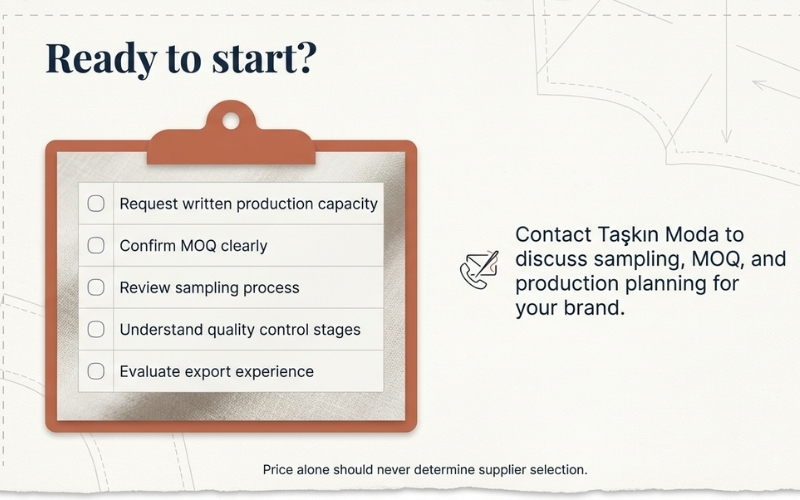
Before making a decision, brands should:
✔ Request written production capacity
✔ Confirm MOQ clearly
✔ Review sampling process
✔ Understand quality control stages
✔ Evaluate export experience
Price alone should never determine supplier selection.
Reliable women’s clothing manufacturer in Turkey
If you are looking for a reliable women’s clothing manufacturer in Turkey with structured production capacity, private label expertise, and export experience, partnering with a factory-based manufacturer is essential.
Contact us to discuss sampling, MOQ, and production planning for your brand.
Frequently Asked Questions: Advice From Expert
What is the minimum order quantity (MOQ)?
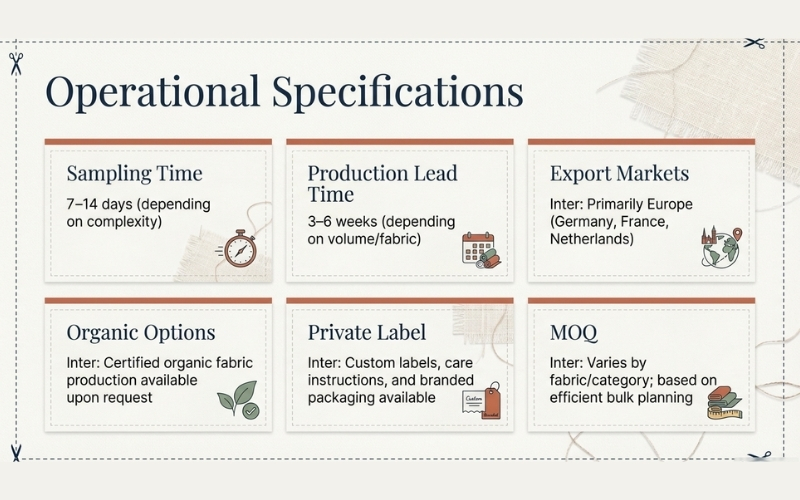
MOQ varies depending on fabric type and product category. It is determined based on efficient bulk production planning.
How long does sampling take?
Typically 7–14 days depending on model complexity.
What is the average production lead time?
Generally 3–6 weeks depending on order volume and fabric sourcing.
Do you offer private label production?
Yes. Custom labels, care instructions, and branded packaging are available.
Do you produce organic garments?
Certified organic fabric production can be arranged upon request.
Which countries do you export to?
Primarily European markets.
How is quality control managed?
Multi-stage inspection from cutting to final packaging.
What are the payment terms?
Payment structure depends on order volume and contractual agreement.

Özlem Kılıç