Private Label Women’s Clothing Manufacturer
Private Label Women’s Clothing Manufacturer
Advantages, MOQ, Sampling & Production Process (2026 Guide)
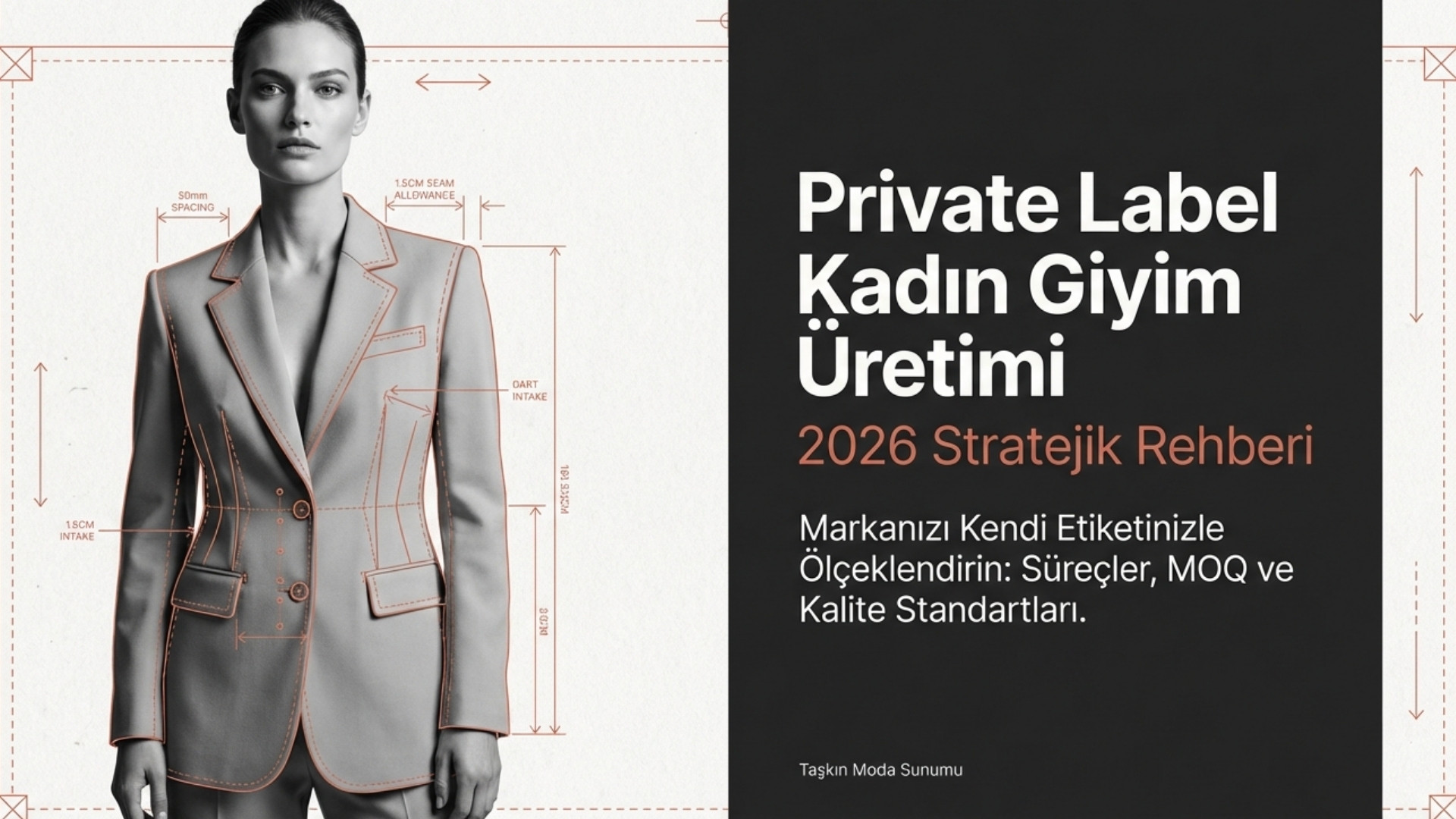
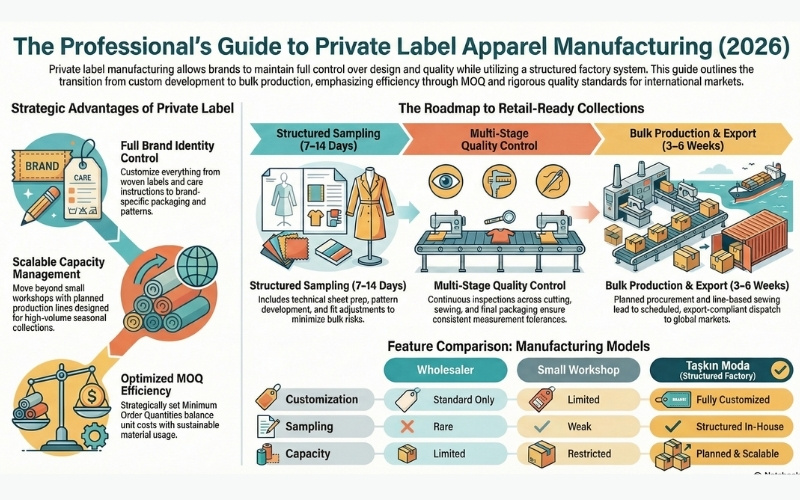
Working with a private label women’s clothing manufacturer allows brands to produce garments under their own label while maintaining full control over design, fabric selection, quality standards, and packaging. A professional textile manufacturer manages sampling, pattern development, fabric sourcing, bulk production, multi-stage quality control, and shipment within a structured factory system. Minimum Order Quantity (MOQ) ensures production efficiency and cost balance, while a systematic sampling process minimizes bulk production risks.
What Is Private Label Manufacturing in Women’s Apparel?
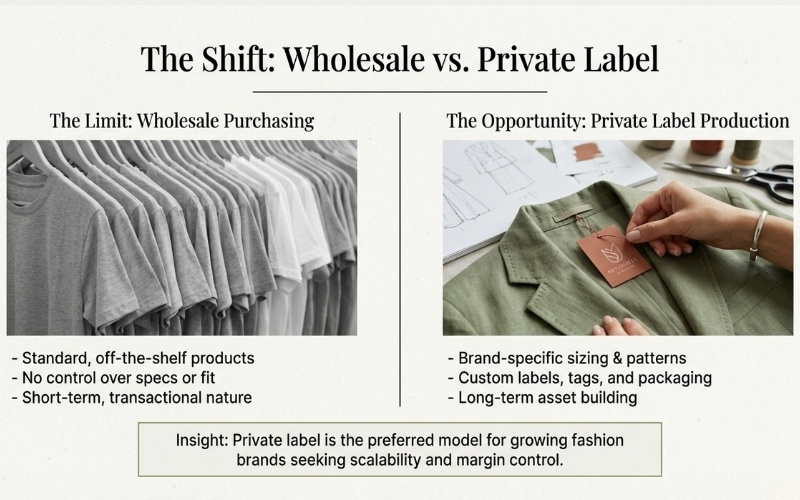
Private label manufacturing is a production model where garments are produced under a brand’s own name and specifications.
Unlike wholesale purchasing:
-
Products are developed specifically for the brand
-
Labels, care instructions, and packaging are customized
-
Patterns and sizing standards are brand-specific
-
Long-term production consistency is established
This model is preferred by growing fashion brands seeking scalability and margin control.
Key Advantages of Working with a Private Label Women’s Clothing Manufacturer
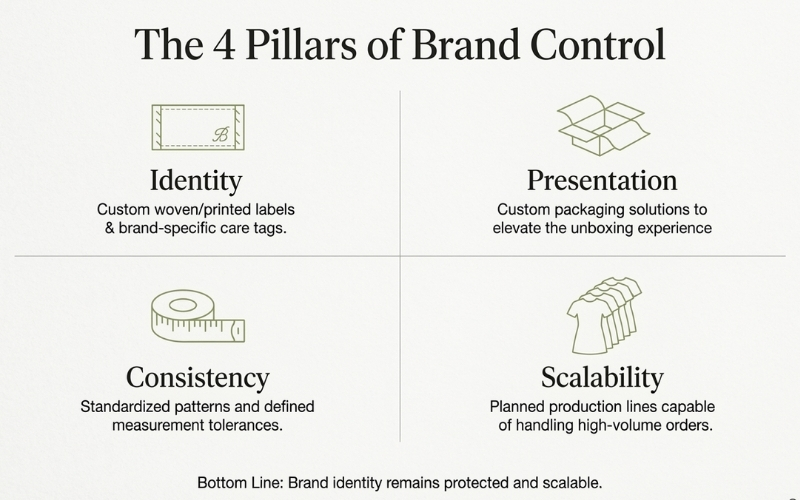
For brands targeting European markets, export experience, social compliance, and delivery discipline are critical selection criteria.
• Full Brand Control
Private label production enables:
-
Custom woven or printed labels
-
Brand-specific care labels
-
Custom packaging solutions
-
Collection-based product development
Brand identity remains protected and scalable.
• Scalable Bulk Production
A structured textile manufacturer provides:
-
Planned production lines
-
Capacity management for high-volume orders
-
Seasonal collection flexibility
-
Consistent repeat production
Small workshops often lack scalable systems for growth-oriented brands.
• Standardized Quality Management
With private label production:
-
Patterns are standardized
-
Measurement tolerances are defined
-
Fabric specifications are documented
-
Quality benchmarks remain consistent across collections
This reduces return rates and protects brand reputation.
Why Is MOQ (Minimum Order Quantity) Critical?
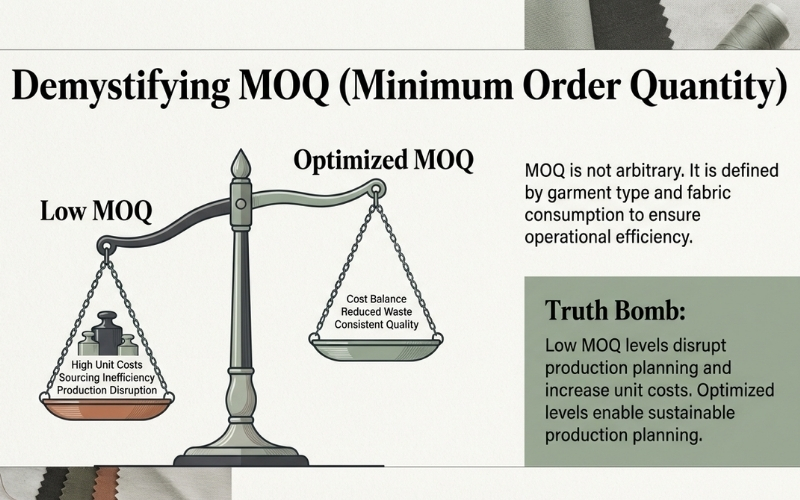
MOQ defines the minimum production quantity required to ensure operational efficiency.
Low MOQ levels may:
-
Increase unit costs
-
Disrupt production planning
-
Reduce fabric sourcing efficiency
Optimized MOQ levels:
-
Improve cost balance
-
Reduce material waste
-
Support consistent quality
-
Enable sustainable production planning
A professional manufacturer determines MOQ based on garment type, fabric composition, and production workflow.
The Sampling Process: The Foundation of Successful Bulk Production
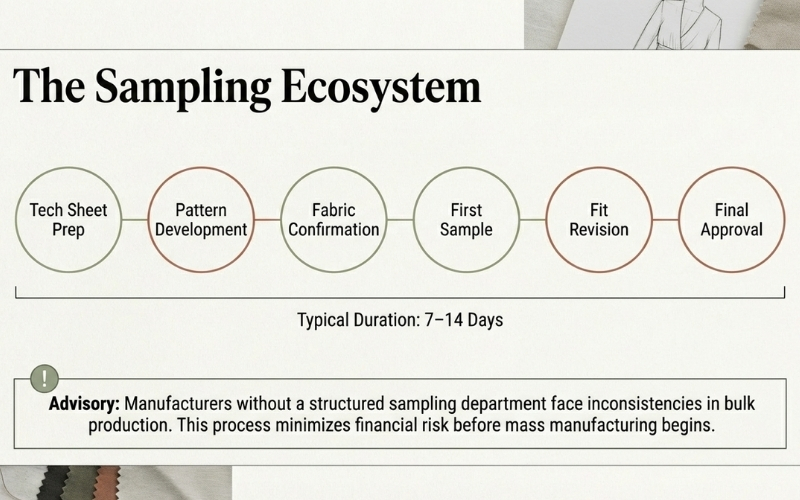
Sampling is the most critical phase in private label production.
Standard Sampling Steps:
-
Technical sheet preparation
-
Pattern development
-
Fabric confirmation
-
First sample production
-
Revision and fit adjustments
-
Final approval
Manufacturers without a structured sampling department often face inconsistencies during bulk production.
A professional sampling process reduces financial and operational risk before mass production begins.
Production Process: From Order to Shipment
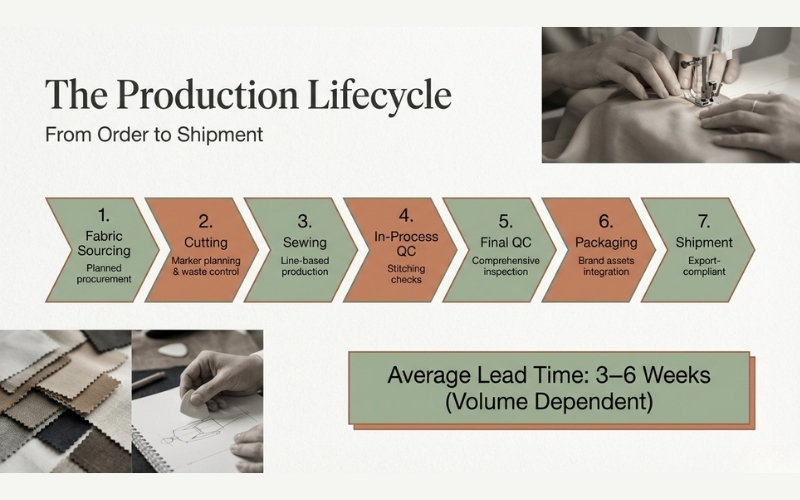
A structured private label women’s apparel production process includes:
• Fabric Sourcing
Planned procurement aligned with delivery timelines.
• Cutting
Marker planning and waste control management.
• Sewing
Line-based production system with in-line inspections.
• In-Process Quality Control
Measurement and stitching inspections during sewing.
• Final Quality Control
Comprehensive inspection before packaging.
• Labeling & Packaging
Brand-specific labeling and packaging integration.
• Shipment
Export-compliant packing and scheduled dispatch.
This structured workflow ensures reliability for international buyers.
Export-Oriented Private Label Manufacturing
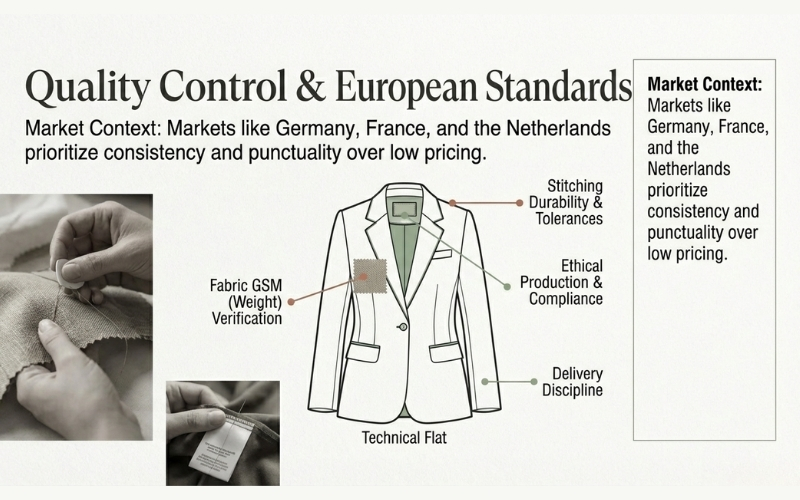
Manufacturers supplying European markets must demonstrate:
-
Ethical production practices
-
Social compliance standards
-
Delivery time discipline
-
Clear communication channels
Markets such as Germany, France, and the Netherlands prioritize consistency and punctuality over low pricing.
Export experience significantly reduces compliance and logistics risks.
Comparison Table: Supplier Matrix
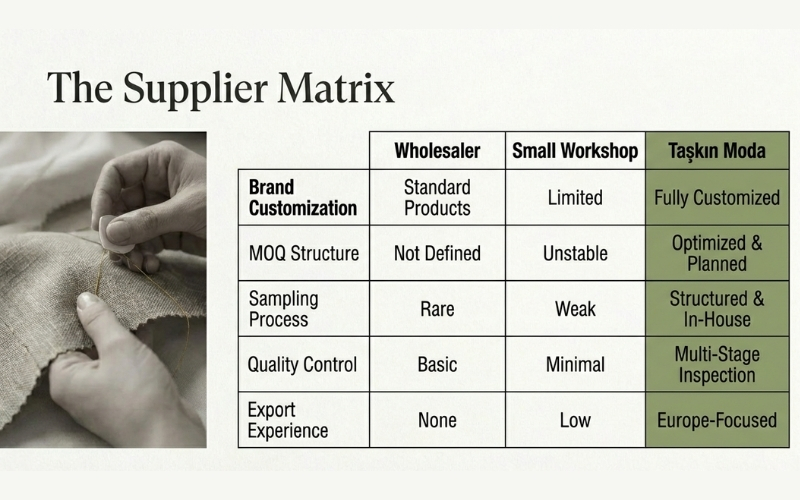
| Feature | Wholesaler | Small Workshop | Taşkın Moda |
|---|---|---|---|
| Brand Customization | Standard products | Limited | Fully customized |
| MOQ Structure | Not defined | Unstable | Optimized & planned |
| Sampling Process | Rare | Weak | Structured & in-house |
| Quality Control | Basic | Minimal | Multi-stage inspection |
| Bulk Production Capacity | Limited | Restricted | Planned & scalable |
| Export Experience | None | Low | Europe-focused |
Pricing Factors in Private Label Production
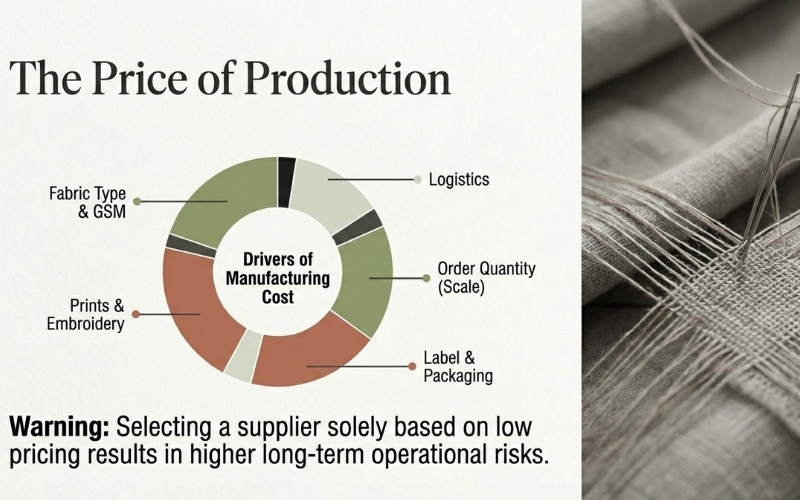
The cost of women’s garment manufacturing depends on:
-
Fabric type
-
Fabric GSM (weight)
-
Printing or embroidery applications
-
Order quantity
-
Label and packaging type
-
Logistics and shipping method
Selecting a supplier solely based on low pricing often results in higher long-term operational risks.
Taşkın Moda Positioning
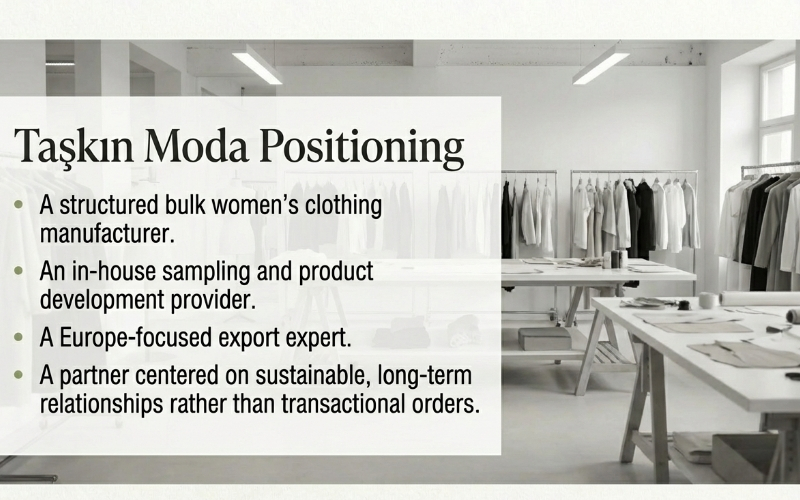
Taşkın Moda operates as:
-
A structured bulk women’s clothing manufacturer
-
A private label production partner
-
An in-house sampling and product development provider
-
A Europe-focused export manufacturer
-
A factory implementing multi-stage quality control
The approach is centered on sustainable, long-term manufacturing partnerships rather than short-term transactional orders.
Decision Guide: How to Choose the Right Private Label Manufacturer
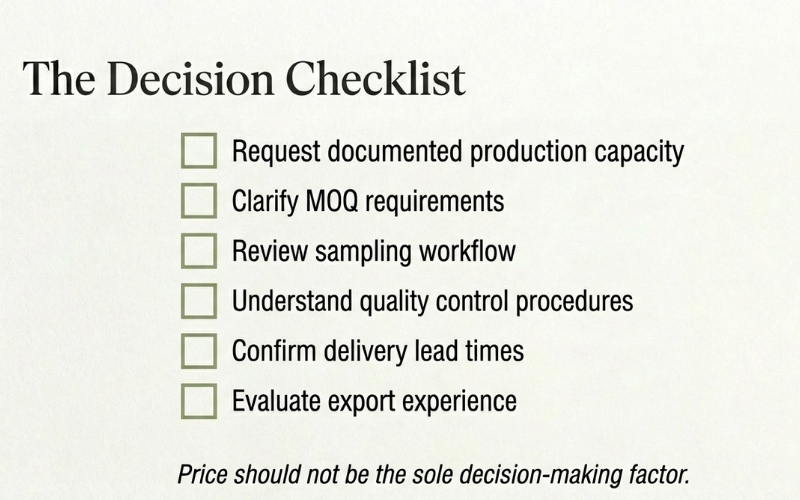
Before finalizing a manufacturing agreement, brands should:
✔ Request documented production capacity
✔ Clarify MOQ requirements
✔ Review sampling workflow
✔ Understand quality control procedures
✔ Confirm delivery lead times
✔ Evaluate export experience
Price should not be the sole decision-making factor.
Choose the Best Private label women’s clothing manufacturer
If you are looking for a structured private label women’s clothing manufacturer with scalable production capacity, professional sampling processes, and European export experience, partnering with a factory-based manufacturer is essential.
Contact us to discuss MOQ, sampling development, and production planning tailored to your brand.
Frequently Asked Questions: Expert Point of View
What is private label clothing manufacturing?
It is a production model where garments are manufactured under a brand’s own label and specifications.
What is the typical MOQ?
MOQ varies by garment category and fabric type. It is defined based on production efficiency.
How long does sampling take?
Generally 7–14 days depending on garment complexity.
What is the bulk production lead time?
On average 3–6 weeks depending on order volume and fabric sourcing.
Do you offer custom labeling?
Yes. Woven labels, printed labels, and care instructions are customized.
Do you produce organic garments?
Certified organic fabric production can be arranged upon request.
Do you export to Europe?
Yes, production planning is aligned with European market standards.
How is quality control handled?
Through multi-stage inspections from cutting to final packaging.
Is low MOQ possible?
MOQ is evaluated based on production efficiency and cost balance.

Özlem Kılıç